
Alzheimer's: what it is and how carers make the difference
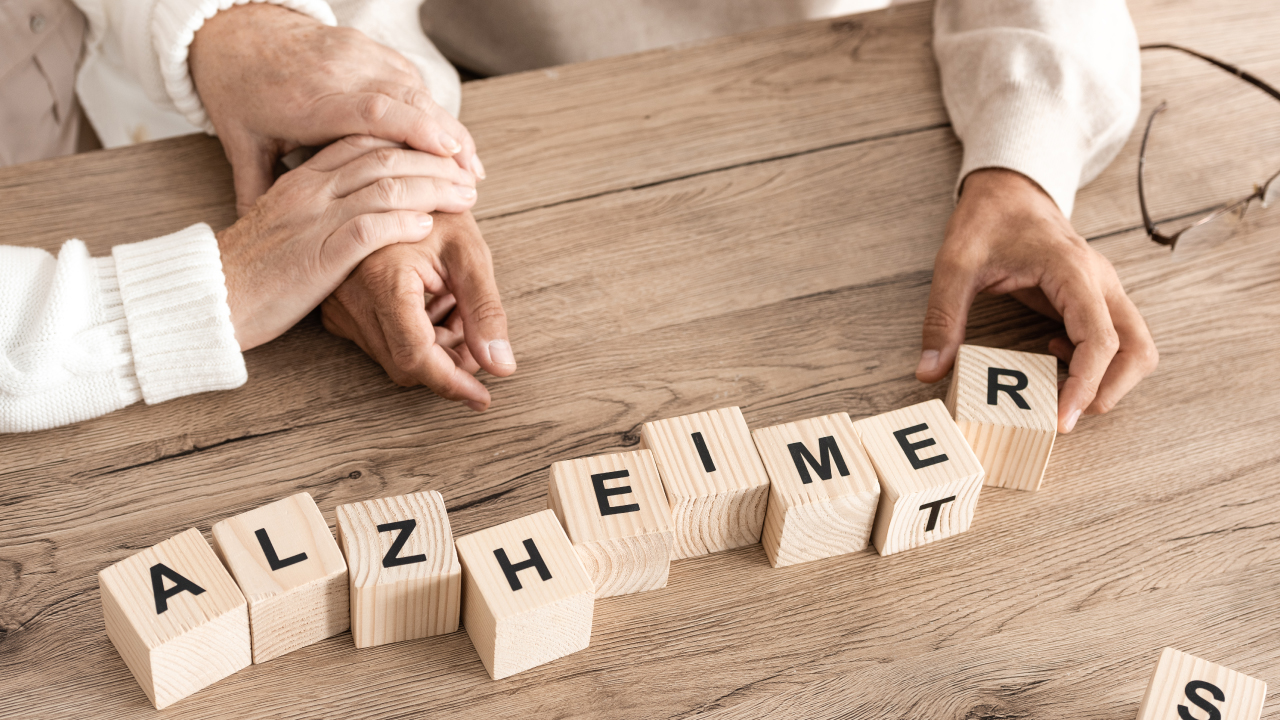
When someone receives (or suspects) a diagnosis of Alzheimer's disease, the first reaction is rarely "OK, let's take this step by step". Usually it is fear. Then comes confusion. And, almost always, guilt: "How did I not notice sooner?", "Is this a normal part of ageing?" and "What now?"
So instead of dwelling on the differences between Alzheimer's and Dementia, let's get to what matters: explaining Alzheimer's clearly and talking about the role of carers, the one no one prepares you for, but which becomes the centre of life.
Key points of this article
- Alzheimer's disease is a progressive neurological condition that begins, in most cases, with the loss of recent memory and gradually affects a person's independence
- The early symptoms are often subtle and confused with normal ageing, which can delay diagnosis
- Alzheimer's does not affect only those living with the disease: carers play a central role in safety, wellbeing and quality of life
- Treatment is not limited to medication: routines, appropriate communication, a safe environment and emotional support make a real difference
- Caring requires knowledge and support: protecting the carer's health is essential to ensure sustainable care over time.
What is Alzheimer's disease?
Alzheimer's disease is a progressive neurological condition. Slowly, it changes the way the brain stores memories, organises ideas, interprets the world and guides behaviour.
At first, it seems like "just" forgetfulness, but Alzheimer's is not a problem of attention or distraction. It is, often, the difficulty in creating new memories and recalling recent information.
Imagine this:
- The person remembers old stories well (childhood, youth)
- But cannot remember what they had for lunch yesterday
- Or where they left the keys 10 minutes ago
- And starts repeating questions because, to them, it is as if it were the first time.
Over time, the brain loses connections between neurons and some areas become less efficient. Memory is the first to show signs, but it is not the only one. The disease also affects:
- Language (words that "escape")
- Orientation (sense of time and space)
- Planning and decision-making
- Behaviour and emotions.
What are the first symptoms of Alzheimer's?
The early symptoms are often subtle and, for that reason, easy to dismiss.
The key point is the frequency and the impact on independence.
Common signs in the early stages:
- Repeatedly forgetting recent events
- Asking the same questions several times
- Losing objects and accusing others of having taken them
- Difficulty finding words (speech becomes more "limited" or with pauses)
- Disorientation in familiar places
- Mood changes (irritability, anxiety) or social withdrawal
- Difficulty managing everyday tasks (bills, medication, cooking).
And there is an important detail: many people do not realise what is changing. It is not stubbornness. It can be part of the process itself.
Alzheimer's does not affect only memory, it affects the relationship with the world
One of the hardest things for those who care is realising that, at times, the person:
- Misinterprets what they see and hear
- Reacts with fear to help they once accepted
- Or insists on an idea that makes no sense to others.
This happens because Alzheimer's affects the way the brain processes information and makes "sense" of what is around it.
This is where very typical behaviours appear:
- Suspicion ("they are stealing from me")
- Agitation at the end of the day (very common)
- Insomnia and day/night confusion
- Wandering (walking with no purpose)
- Resistance to bathing, dressing or eating.
And this does not define the person. It defines the disease.
Is there a cure for Alzheimer's?
There is no known cure. But there is treatment and management, and that changes everything.
In practice, the goal is to:
- Prolong functioning for as long as possible
- Reduce symptoms (memory, behaviour, sleep, anxiety)
- Maintain quality of life
- Protect the carer, because without a carer there is no sustainable care.
There are medicines that can help relieve symptoms and, in some cases, slow progression for a time, especially in the early stages. But the heart of "treatment" is rarely medication alone.
What tends to have a real impact:
- A stable routine
- Adapted cognitive stimulation
- Light, regular physical activity
- Occupational therapy and strategies for independence
- A safe and predictable environment
- Emotional and practical support for the family.

The role of carers: more than "helping"
A carer is not only someone who "does tasks". Often they are the person who:
- Translates what is happening
- Keeps the environment stable when the person's mind no longer is
- Heads off conflicts before they begin
- Protects dignity without being patronising
- And finds ways to keep the person connected to life.
And this requires technique, not just love. So here are 5 tips to help carers better understand their role:
1) Caring begins by creating predictability
With Alzheimer's, the brain copes poorly with change. Routine is a "map" that reduces anxiety.
Simple things that help a great deal:
- Consistent times for meals and sleep
- Tasks always in the same order
- As few "surprises" as possible in daily life
- Short instructions, one at a time.
2) Communication: less logic, more calm
Trying to convince someone with arguments often fails. The goal is not to win arguments, it is to maintain connection.
Golden rules (even when it is hard):
- Speak slowly, in short sentences
- Maintain eye contact
- Allow time to respond
- Avoid correcting in public or "testing" their memory
- Validate emotions before explaining ("I understand that this frightens you…").
Sometimes, the person does not need an explanation. They need reassurance.
3) Hygiene, dressing and meals: turning friction into cooperation
These tasks are where a lot of resistance arises, because they can be experienced as intrusive.
Useful strategies:
- Explain step by step what you are going to do
- Offer simple choices ("would you like this jumper or that one?")
- Comfortable, easy clothing (velcro, elastic)
- Meals in a calm place, with time and without rushing
- Adapt the consistency of food if there is difficulty swallowing.
4) Safety: preventing before it happens
The risk of falls, medication mistakes, hobs left on or leaving home with no destination increases as the disease progresses.
Quick safety checklist (just the essentials):
- Good lighting at home
- Remove loose rugs and obstacles
- Organise medication with reminders
- Reduce visual clutter (intense patterns can be confusing)
- Spot signs of wandering and step up supervision.
5) The carer needs care too (or it all comes crashing down)
This is perhaps the most overlooked point, and the most decisive.
Signs of carer burnout:
- Constant irritability
- Physical exhaustion
- Guilt over everything
- Isolation
- Difficulty sleeping
- Symptoms of anxiety or depression.
The carer needs:
- Real breaks (even short ones);
- Sharing of tasks (it cannot all fall on "one person");
- Formal support where possible;
- Support groups;
- Medical and emotional follow-up if necessary.
Caring is not a test of endurance. It is a marathon. And marathons are run with refuelling.
"I have Alzheimer's in the family: is it hereditary?"
Hereditary Alzheimer's exists, but it is rare. In most cases, genetics increase risk, they do not determine destiny.
What is most useful to remember:
- Family history can increase the likelihood
- But lifestyle factors and cardiovascular health also count for a lot
Is it possible to prevent Alzheimer's?
There is no absolute prevention. But there are measures with an impact:
- Regular physical exercise
- Keeping blood pressure, diabetes and cholesterol under control
- Not smoking and moderating alcohol
- Consistent sleep
- Maintaining a social life (isolation takes its toll)
- Stimulating the brain (learning, reading, hobbies, logic games).
Caring for someone with Alzheimer's means learning to be present in a different way. It means trading haste for patience, logic for empathy and control for constant adaptation. There are difficult days, moments of exhaustion and a quiet sense of loss, but there are also gestures that continue to create safety, connection and affection. The carer is not just supporting a person with Alzheimer's; they are sustaining their dignity, day after day. And that, even when it seems invisible, has immense value.
The content of this blog is for information only. It does not replace medical diagnosis or treatment. Always consult a healthcare professional.
Need non-emergency patient transport?
Ambula handles everything — with comfort, punctuality and care.
Book a transport