Choosing the right wheelchair is essential to ensure safety, mobility and, above all, comfort. It is far more than an accessory; the wheelchair becomes an extension of the body of the person using it, significantly improving their quality of life. Each person has different needs, and the important thing is to know how to choose the wheelchair best suited to the needs and limitations of each individual.
Key points of the article
The choice of wheelchair should take into account the type of use (temporary or ongoing), the level of mobility and the context in which it will be used
There are various models available (manual, electric, sports, transport, reclining, paediatric, travel or shower chairs), each adapted to specific needs
The importance of comfort and ergonomics in preventing pain and circulation problems
Financing or subsidy options through the SNS (the Portuguese National Health Service), Social Security and ADSE.
When is a wheelchair needed?
There are various situations in which a wheelchair may be needed. It is important to look at the circumstances and work out whether the use of the chair stems from a temporary situation (recovery from surgery or a fracture) or a permanent one (long-term mobility limitations).
Temporary situations vs. ongoing use
Temporary use: simpler or folding models may be enough
Ongoing use: it is essential to invest in comfort, ergonomics and adaptability.
Assessment by health professionals
Before going ahead with a purchase or rental, you should consult a doctor. The professional will assess the posture, muscle strength, range of movement and specific needs of the user, to avoid choices that cause discomfort or injury.
Types of wheelchair available
There are various wheelchair models available; shall we get to know each one better?
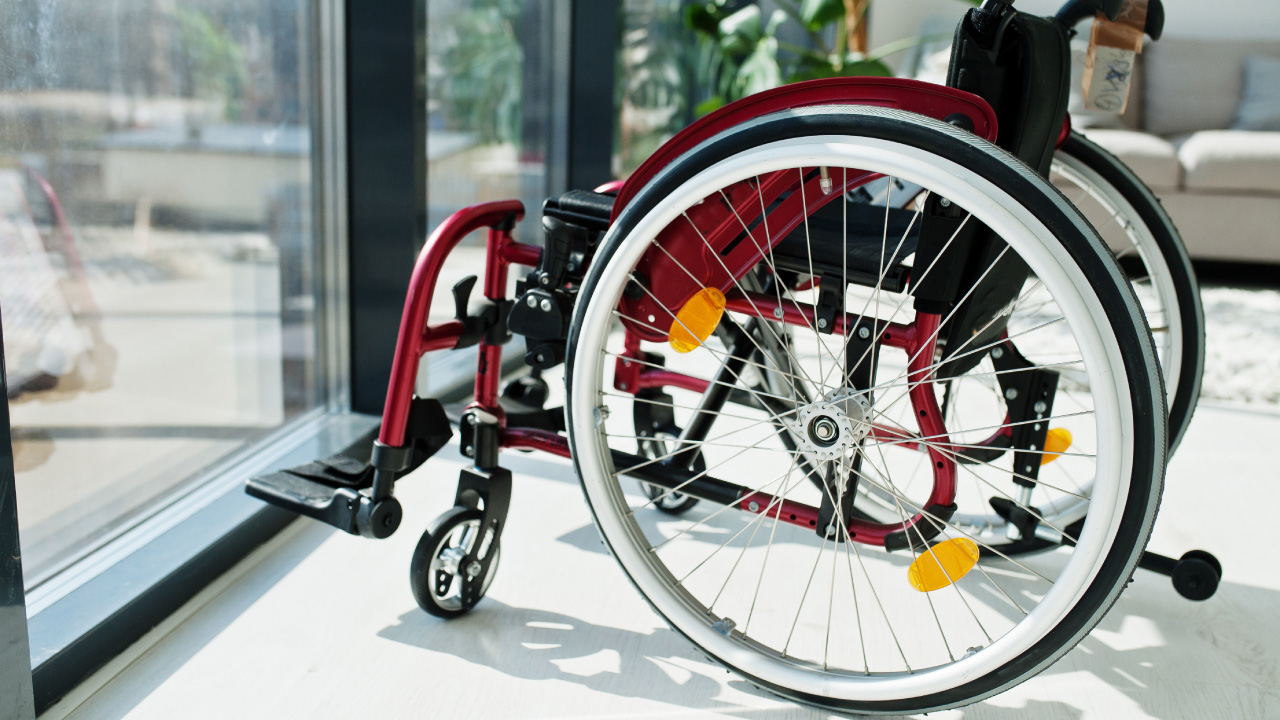
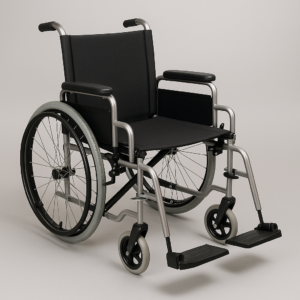
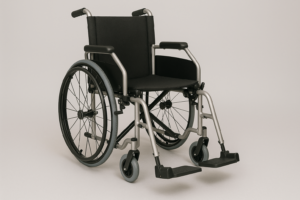
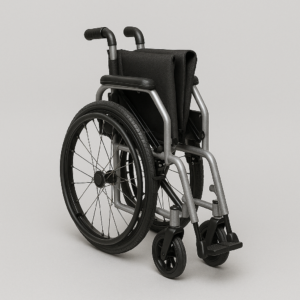
Manual wheelchair
These are moved by the user themselves or by a companion. They can be folding or rigid.
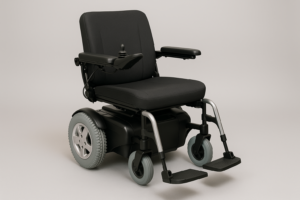
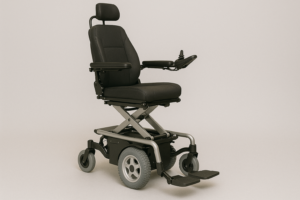
Electric wheelchair
These offer greater independence and are suitable for those with little arm strength or reduced mobility.
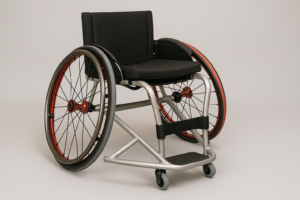
Sports wheelchair
These chairs are adapted for certain sports such as basketball or tennis.
Transport model
These are lighter and are used only with the help of a companion.
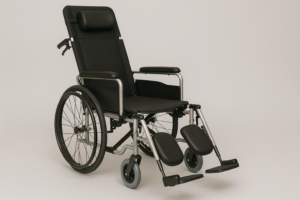
Reclining wheelchair
It allows the body's position to be changed, prevents pressure sores from developing and allows the legs to be positioned correctly.
Wheelchair with elevation
For those who need more independence, it provides access to cupboards or higher places. It aids digestive, circulatory and respiratory functions.
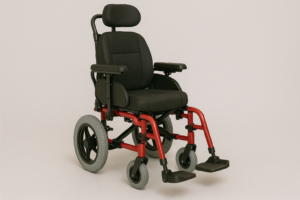
Paediatric wheelchair
Suitable for the specific needs of a child and for their growth.
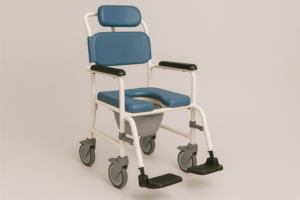
Shower wheelchair
For those who have difficulty carrying out their personal hygiene; it does not rust on contact with water and fits over the toilet.
Essential criteria for choosing a wheelchair
As mentioned earlier, there are a few factors to take into account when choosing the most suitable wheelchair model. Shall we look closer?
The user's level of mobility
It is important to assess the user's mobility: can the person move around on their own? Or do they need help from others?
The person's weight and height
After assessing the user's weight and height, it is important to choose a chair in which the seat, the height of the backrest and the load capacity are suited to the individual's build, so as to avoid any kind of discomfort or poor posture.
Type of surface / environment of use
Indoors: smaller wheels and a lighter frame Outdoors: wider, more hard-wearing tyres to cope with uneven terrain.
Frequency and duration of use
Those who spend many hours in the chair should prioritise models with anatomical cushions, lumbar support and adjustable backrests and footrests.
The need for postural support or accessories
Some users need lateral supports, safety belts, reclining backrests or head and foot supports, so that the person feels as comfortable as possible.
Comfort and ergonomics: details that make a difference
For those who spend many hours in the wheelchair, comfort and ergonomics are essential to prevent pain, injuries and poor circulation.
Seat (width and depth): it should fit the body to avoid pressure points and maintain a correct posture
Armrests: an appropriate height prevents shoulder strain and lower-back pain, as well as making transfers easier
Backrest: an adjustable recline and lumbar support help reduce fatigue and align the spine
Cushions: foam, gel or air distribute pressure and prevent pressure sores; breathable covers reduce heat and moisture
Footrests: height adjustment keeps the knees and hips at a comfortable angle and prevents swelling
Wheels and tyres: suited to the surface, they reduce vibrations and improve stability.
Practical tips before buying or renting
Check that the chair fits in the spaces where it will be used
Consider how easy it is to transport and store
Ensure maintenance and the availability of replacement parts
Look into second-hand chairs
Try different models before the final decision.
Financing or support options in Portugal
Wheelchairs can be expensive and are not always within everyone's budget. However, there are options that make access to them easier.
Prescription through the SNS
One option is to obtain a prescription through the SNS (the Portuguese National Health Service). In this way, a wheelchair suited to the patient's needs is provided. The prescription is issued by a health professional, usually at hospitals or health centres.
ADSE (the Portuguese civil servants' health scheme): it reimburses part of the amount paid, in line with its schedule of benefits and on presentation of a prescription and an invoice. More details: price list and rules (ADSE)
Extra topics:
Wheelchairs for travel
Those with reduced mobility do not have to stop enjoying life; there are chair models that are ultra-light and folding, ideal for transporting the user in cars, buses and aeroplanes.
Wheelchairs in hospital or rehabilitation settings
In hospital or rehabilitation settings, comfort and mobility are prioritised during the patient's stay. It is therefore important to choose a chair that suits their needs.
Where to buy wheelchairs
You can find different models and price ranges in specialist shops and healthcare chains:
Ergométrica– A focus on ergonomics and bespoke solutions.
The suggested websites and shops for buying wheelchairs presented in this article are for information purposes only. We have no commercial relationship, partnership or affiliate programme with the companies mentioned. We recommend that you compare prices, check warranty and returns policies, and confirm with health professionals whether the models meet your specific requirements before making a purchase.
Need non-emergency patient transport?
Ambula handles everything — with comfort, punctuality and care.
We use essential cookies to run the site and, with your permission, analytics and marketing cookies to understand how the site is used and improve your experience. You can accept, reject or learn more in our Cookie Policy.