
End-of-life signs: what to expect and how to support those who matter most

It is true that we do not live forever, but talking about the end of life can be difficult. When the health of someone we love becomes fragile, doubts, fear and many decisions arise, but it is possible to go through this stage with less anguish and more comfort.
Key points of the article
- End of life vs palliative care: all end-of-life care is palliative, but palliative care can begin months/years earlier, focusing on quality of life
- Signs to recognise: reduced appetite and energy, irregular breathing, increased sleepiness, emotional/cognitive changes and more limited communication
- Comfort first: pain and symptom control, a calm environment, keeping the mouth moist and structured family presence all make a difference
- Communication and planning: aligning goals with the healthcare team, recording preferences and knowing when to escalate care (SNS 24/112)
- Resources in Portugal: SNS/RNCP, RNCCI/ECCI, associations and support groups help patients and carers
- Support for the carer: setting limits, delegating tasks and using solutions that help
What the final stage of life means
Throughout our lives we go through various stages, aware that one day we will reach the last. The final stage of life corresponds to the period in which a particular illness has no cure and living becomes uncomfortable. The focus is on comfort, dignity and the relief of pain. In Portugal, this approach is part of palliative care.
The difference between palliative care and end-of-life care
Palliative care begins before this stage; it works alongside treatments to control pain, the discomfort of some symptoms and to support the patient and family psychologically. End-of-life care, on the other hand, comes in the last days or weeks of life, when the needs for comfort and presence increase and invasive interventions lose their benefit.
| Aspect | Palliative Care | End of Life |
|---|---|---|
| Time horizon | Months/years | Days/weeks |
| Clinical focus | Symptom relief and maintaining functionality | Maximum comfort and serenity |
| Interventions | May coexist with treatments for the illness | Procedures with no benefit are avoided |
| Communication | Advance planning and phased information | Short conversations, presence and meaningful rituals |
| Place of care | Home, hospital, consultations, home care teams | Preference for home or a calm unit, organised visits |
| Decisions | Advance directives, symptom control, social support | Final preferences (where to stay, who to be with), palliative sedation when indicated |
What to expect physically and emotionally
Our body goes through changes as we grow older. As such, in the final stretch these changes can be physical or emotional. The aim is to prevent and relieve suffering, with advance care plans and open communication with the family.
Common signs of the end of life
The most common warning signs fall into three groups: physical, emotional/psychological and cognitive (communication) changes. Let''s understand each one better.
Physical changes (breathing, appetite, energy)
- Breathing: may become irregular
- Reduced appetite and thirst: the body no longer "asks" for energy as it did before
- Energy/sleep: more sleepiness, less strength and inclination for basic activities
- Skin and temperature: cold extremities, pale skin or with a purplish colouring.
Emotional and psychological changes
It is common for some anxiety, mild restlessness, introspection and a greater need for silence to arise. However, adopting small changes such as consistent routines, soft music, a comforting touch and the presence of those who are close can make a difference.
Cognitive and communication changes
Cognitive changes can bring some confusion, vivid dreams and slower speech or with fewer words. Speak slowly, use short sentences and validate the emotions ("I''m here"). Communicating well with an older person makes all the difference.
How to provide comfort at this stage
At this stage, the aim is to relieve suffering and preserve dignity, respecting each person''s wishes and pace. With the guidance of the healthcare team and the support of the family, it is possible to offer physical comfort and also emotional serenity, through simple routines, clear communication and memories that bring meaning.
Managing pain and physical symptoms
- Use of painkillers and adjustment of medication
- Positioning and prevention of wounds: changing position regularly, support cushions
- Secretions/shortness of breath: an airy environment and managing medication as prescribed.
The importance of hydration and a calm environment
Keeping the body hydrated is extremely important to avoid dehydration. Even so, at this stage a reduction in appetite and thirst is common. When this happens, forcing the body may not be beneficial, but it can be done with small tips that make all the difference. To keep the mouth moist, use damp gauze and moisturising balms. And to stimulate the appetite, you can plan meals with nutrient-rich foods that the older person enjoys.
To keep a calm environment, keep a soft night light, control the noise and leave cherished objects nearby.
Emotional support and family presence
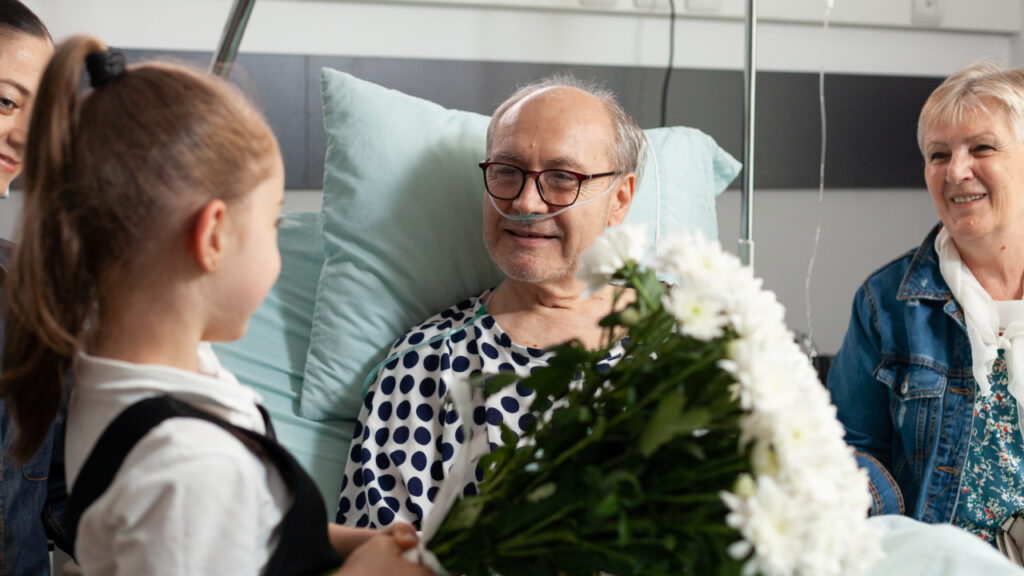
The presence and support of family members make all the difference in this process. You can make your presence felt through:
- Active listening and touch (holding hands, gentle massage) reduce anxiety
- Memories (favourite music, photos) give meaning and comfort.
Support resources in Portugal
Palliative care in the SNS
Palliative care is part of the SNS (the Portuguese National Health Service – Serviço Nacional de Saúde). The aim is to relieve symptoms, support families and respect the preferences of the person with a serious or advanced illness, complementing the other healthcare services when appropriate. In Portugal, this right is enshrined in the Palliative Care Framework Law (Law no. 52/2012) and reinforced by Law no. 31/2018 on the rights of people at the end of life.
How to access this care
- Talk to the family doctor or hospital team
- The choice of resource (home care team, hospital consultation, palliative care unit, etc.) depends on the clinical criteria and the complexity, defined at national level
- The Regional Coordinating Teams manage referral to network units when palliative inpatient care is needed.
Hospitals, continuing care units and home care teams
When more support is needed, there are three avenues that work together: a home care team (ECCI/RNCCI), RNCCI units (inpatient care) and hospital teams.
The first is the home care team (RNCCI/ECCI, Portugal''s National Network for Integrated Continuing Care). It is suitable when the person is clinically stable or has moderate needs and finds it difficult to travel. As a rule, it is covered by the SNS, with possible costs only for medication or devices.
If care at home is no longer enough, whether due to clinical instability, the need for intensive rehabilitation or symptom control, an RNCCI unit is the ideal choice, with inpatient care, 24h monitoring, an individual plan and preparation for the return home.
In hospitals, specialised teams assess and stabilise, define the treatment plan and act as a bridge with ECCI/RNCCI and primary healthcare. To access this, the simplest route is to talk to the family doctor (or the hospital team if there is an inpatient stay), who will carry out the assessment and the referral to the most appropriate response.
Associations and support lines for families
APCP — Portuguese Association of Palliative Care (Associação Portuguesa de Cuidados Paliativos): information for patients, families and professionals
SNS 24 (808 24 24 24): guidance and referral 24/7 for non-emergency situations. However, for more urgent cases call 112.
The role of family and carers
Family and carers can help a great deal by aligning expectations with the clinical team (place of care, visits, rituals), planning the environment (a comfortable bed, cherished mementoes, a predictable routine), communicating simply (short sentences, a calm tone, emotional validation), delegating and accepting help (hygiene, feeding, phone calls), looking after themselves (breaks, sleep, food) and documenting decisions (advance care plan and contacts for the SNS palliative care team, ECCI or reference unit).
How to support without losing your own balance
Being the carer of someone who is in the final stage of life can be distressing; it is extremely important to keep a balance between supporting them and your personal life.
- Set the "minimum daily viable": 3 realistic priorities (e.g. medication, light hygiene, 15 min of calm conversation)
- Visible schedule: shifts between family/friends; use a simple board showing who does what (baths, meals, shopping, phone calls)
- Warning signs for the carer: persistent irritability, sleep disturbances, frequent headaches, loss of appetite and a feeling of being on "autopilot". If these arise, talk to the family doctor or a psychologist
- Healthy limits: saying "I can''t today, but I can tomorrow morning" is care, not abandonment
- Logistics that help: our non-emergency/assisted transport services for appointments and treatments reduce the strain on the carer
Open communication with the healthcare team
The healthcare team needs as much information as possible to adapt the care to the patient.
When preparing for the conversation, make a note of the symptoms and the goals for the patient. Do not be afraid to ask questions; they are always useful and help you to better understand what is happening and how you can help.
Be clear and concise, keep direct contact with the palliative care team and make sure the decisions are put in writing (preferences, plan for pain/anxiety, contacts).
Psychological support and support groups
Asking for help is nothing to be ashamed of. It is important to look after the psychological health of both the ill person and the carer. For the ill person, psychological support can focus on relieving anxiety, on meaning and on legacy (letters, albums, audio messages).
For carers and family, brief sessions (in person or online) help with managing stress, guilt and anticipatory grief.
Support groups allow people to share practical experiences (routines, adaptations at home) and reduce isolation; they can be found at: health units, palliative care teams, parishes/local councils and patient associations.
By recognising the signs and aligning care with the healthcare team, it is possible to ensure comfort, dignity and presence for the ill person, while also preserving your own balance. Caring at the end of life is an act of love (and it does not have to be done alone).
The content of this blog is for information purposes. It does not replace medical diagnosis or treatment. Always consult a healthcare professional.
Need non-emergency patient transport?
Ambula handles everything — with comfort, punctuality and care.
Book a transport