
Falls in Older People: How to Prevent Them and Protect Those You Love Most
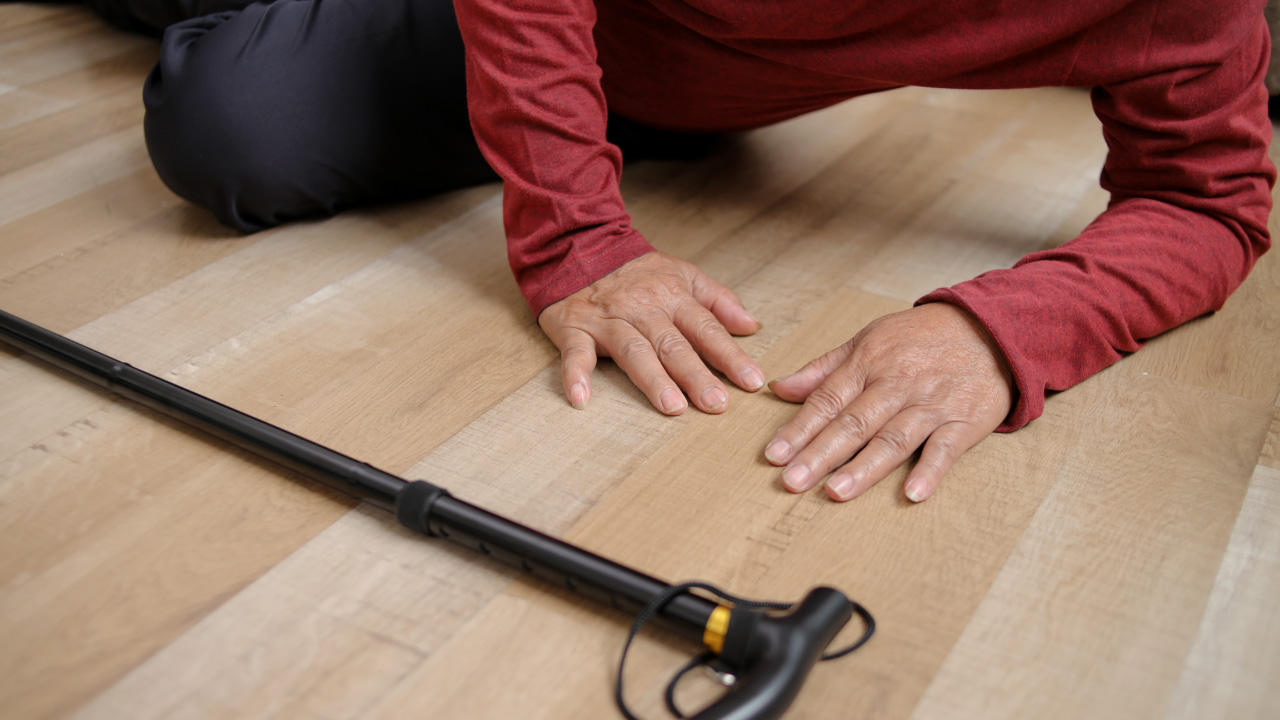
Some moments happen in a second, a misstep, a dizzy spell, a rug that curls up, yet they bring consequences that can last for months. Falls in older people are not a "minor scare". They are one of the greatest public health challenges of ageing and, sadly, they happen more often than we think.
The good news is that most falls are preventable. With information, attention to the warning signs and small changes to the daily routine, it is possible to reduce the risk dramatically and protect those we love most.
Key points of the article
- Falls are the leading cause of serious accidents in older people, but most can be prevented
- The risk increases with changes in vision, muscle strength, balance, chronic illnesses and certain medications
- The home is one of the biggest risk factors: loose rugs, poor lighting and slippery floors are among the main causes
- Regular exercise, especially strength and balance training, significantly reduces the risk of falls
- Adapting the environment (grab rails, night lights and clear walkways) is essential to prevent accidents
- After a fall or fracture, specialised support and adapted transport make recovery easier and help the older person keep their independence.
Why do falls happen (and why are they so dangerous)?
Ageing brings subtle, sometimes silent changes: less sharp vision, slower reflexes, loss of strength in the legs, greater sensitivity to dizziness. Together, these changes make balance more fragile.
The Directorate-General of Health (DGS – Direção-Geral da Saúde) and the World Health Organization (WHO) confirm that falls are the leading cause of accidental death in people over 65. In Portugal alone, according to PORDATA, there are more than 2.6 million people aged 65+, a situation that makes this problem all the more relevant.
According to the guide on preventing the risk of accidents and falls, more than 30% of people aged 65 or over fall every year, and in around half of cases the falls are recurrent. Moreover, the evidence shows that, after a fall, many older people develop a fear of falling again, start moving less, reduce their physical activity and social contact, which ends up weakening the body even further and increasing the risk of new falls.
What lies behind a fall: causes that are rarely just "accidents"
A fall almost never has a single cause. It is a combination of body, mind and the environment.
Changes that come with age
With age, the body gradually changes and this is perfectly normal. Vision loses some sharpness, depth perception decreases and reflexes stop responding as quickly. The feet also begin to "feel" the ground less, and the inner ear, which is our great centre of balance, starts to show signs of wear. Together, these factors make balance more fragile and recovery after a fall harder than it once was.
Balance and gait problems
When balance starts to fail, it usually gives small signs: an unexpected dizzy spell, shorter steps, shuffling feet or losing balance when turning. These are almost imperceptible gestures, but they greatly raise the risk of a fall.
Vertigo is, in fact, one of the main reasons for medical consultations in people over 75.
Loss of muscle strength
Sarcopenia, that is, the loss of muscle mass, means that simple movements such as standing up, climbing a step or turning over in bed become less stable.
Cognitive changes
Dementia and other cognitive impairments distance the older person from their sense of risk. Simply standing up too quickly can result in a serious fall.
Chronic illnesses and medication
Some of the factors identified as high risk are:
- Diabetes
- High blood pressure
- Parkinson''s
- Arrhythmia
- Anaemia
- Poor nutrition
- or taking several medications at the same time.
The home speaks too: places where falls happen most
It is natural to think of the home as the safest space for an older person. After all, it is the place where they have lived for years, where they know every corner and every gesture from memory. But it is precisely because of this familiarity that many dangers go unnoticed:
- Bathroom: wet, slippery floor and lack of support
- Outside the home: uneven steps, ramps, narrow passages
- Bedroom: getting up quickly, objects on the floor, lack of light
- Kitchen and hallways: obstacles, slippery floor, loose rugs.
The consequences go far beyond the fracture
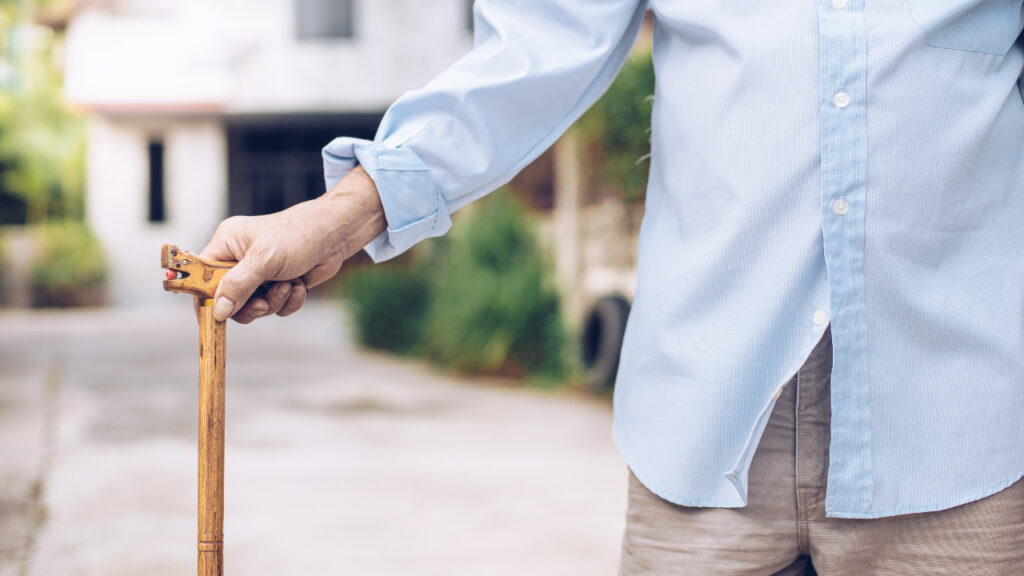
When an older person falls, the impact is rarely limited to the body. A fracture may be the visible start of the problem, but what happens after the fall is often even more transformative. Many older people start to move with apprehension, avoid going out, stop doing activities they loved and lose part of the independence that once seemed assured.
Fear almost always sets in quietly.
Fractures and serious injuries
Femoral neck fractures are among the most feared, and rightly so: the overwhelming majority of hip fractures in older people are linked to falls. Many require surgery, long recovery periods and, in serious cases, can even endanger life itself.
Loss of independence
After a fall, many older people never move as they did before. Studies published in BMC Geriatrics show that up to 60% do not fully regain their previous mobility, even after treatment and rehabilitation. And this is felt day to day: every movement comes to be made with caution, the body seems to "distrust" itself and the routine changes not only because of physical limitation, but also because of the fear of falling again.
Recurrent falls
After the first fall, the risk of new episodes increases significantly. That is why preventing the second fall is often just as important as avoiding the first; it is at that moment that the impact on independence can be greatest. Understanding what triggers falls is the first step; the second is to act. And, fortunately, many of the most effective measures are simple and accessible.
How to reduce the risk: small changes that make a huge difference
Preventing falls is not about turning the home into a hospital ward. It is about making everyday life more intuitive, comfortable and safe.
Making the home more balance-friendly
Simple adjustments can reduce the risk by more than 50%:
- LED lights in hallways and the bathroom
- Fix down or remove rugs
- Fit grab rails in the bathroom
- Arrange objects at hand level
- Use non-slip strips on stairs
- Remove low or unstable furniture.
Ultimately, every improvement to the home is also a way of caring for the older person: making the space safer, more comfortable and more supportive of their independence.
Choosing the right footwear
It may seem like a detail, but it really does make a difference. The right footwear is one of the simplest ways to ensure better balance day to day. Closed shoes, with a rubber sole and good ankle support, work almost like a "life insurance for balance". Slippers, loose mules or walking in socks on a smooth floor, on the other hand, greatly increase the risk of slipping and should be avoided.
Moving the body (every day)
We all already know that exercise is good for us but, in the case of falls, it is probably the most powerful intervention of all. Moving the body strengthens the muscles, improves balance, gives more confidence when walking and keeps the joints "awake".
And the best part is that it does not need to be intense. More important than intensity is consistency: small movements, done every day, can transform an older person''s safety and independence far more than a heavy session done now and then.
Reviewing medication with the doctor
Reviewing medication with the doctor is an essential step in preventing falls. Some medications such as sedatives, antidepressants, blood pressure medication or certain diabetes medications can cause drowsiness, dizziness or sudden drops in blood pressure.
For this reason, a regular review of medication helps to identify hidden risks and to adjust treatment so that the older person feels safer day to day.
When the problem is balance: vestibular rehabilitation
Many older people spend years dealing with vertigo, dizziness and that feeling that "the ground is moving", without knowing that there is treatment and that it can make a huge difference day to day. As we age, the inner ear (which is our natural centre of balance) loses efficiency, and this translates into instability, unsteady steps and falls that seemingly happen "for no reason".
This is where vestibular rehabilitation comes in. Guided by otoneurologists and specialised physiotherapists, this approach uses simple, specific exercises to train the brain to compensate better for instability. It works on the gaze, posture, head movements and the way the body reacts to changes in position.
In practice, it is a safe, effective method adapted to each person''s pace, often managing to markedly reduce the falls associated with dizziness.
And perhaps most importantly: it helps the older person regain confidence to walk again with more independence and less fear.
And when the fall has already happened? How to act safely
If an older person falls, the most important thing is to stay calm. This first second makes all the difference. Approach slowly, talk to them and try to understand what they are feeling.
The second rule is simple, but crucial: do not try to lift them by force. Pulling or raising them without proper support can worsen an injury that is not yet evident.
Observe carefully. If there is intense pain, any deformity in the limb, confusion, head injuries or if the older person cannot put weight on the leg, do not hesitate:
- Call 112
- Or contact SNS 24 (808 24 24 24).
In these cases, every minute counts to ensure a safe assessment and avoid complications.
After the fall, recovery requires support
A fracture, especially of the femur, involves:
- Hospital admission
- Surgery in most cases
- Intensive physiotherapy
- Multiple appointments and tests
- Prolonged rehabilitation.
And here a real difficulty arises: reduced mobility.
It is precisely in these situations that Ambula''s Non-Emergency Patient Transport becomes a decisive support:
- Take the older person comfortably and safely to physiotherapy sessions
- Ensure adapted transport after a femur fracture
- Make trips to orthopaedics, rehabilitation and tests easier (X-ray, posturography)
- Avoid additional strain and falls during journeys.
The emotional dimension: how to regain confidence
The fear of falling is as disabling as the fall itself.
That is why emotional support, whether from family or from professionals, is just as important as physiotherapy. Walking with someone alongside, starting again slowly, celebrating small achievements: everything counts.
Ageing does not have to mean falling. With small adaptations to the home, attention to health, daily movement and ongoing support, it is possible to maintain independence, safety and quality of life.
The content of this blog is for information purposes. It does not replace medical diagnosis or treatment. Always consult a healthcare professional.
Need non-emergency patient transport?
Ambula handles everything — with comfort, punctuality and care.
Book a transport