
Hearing aids: what they are, how they work and when they are worth it
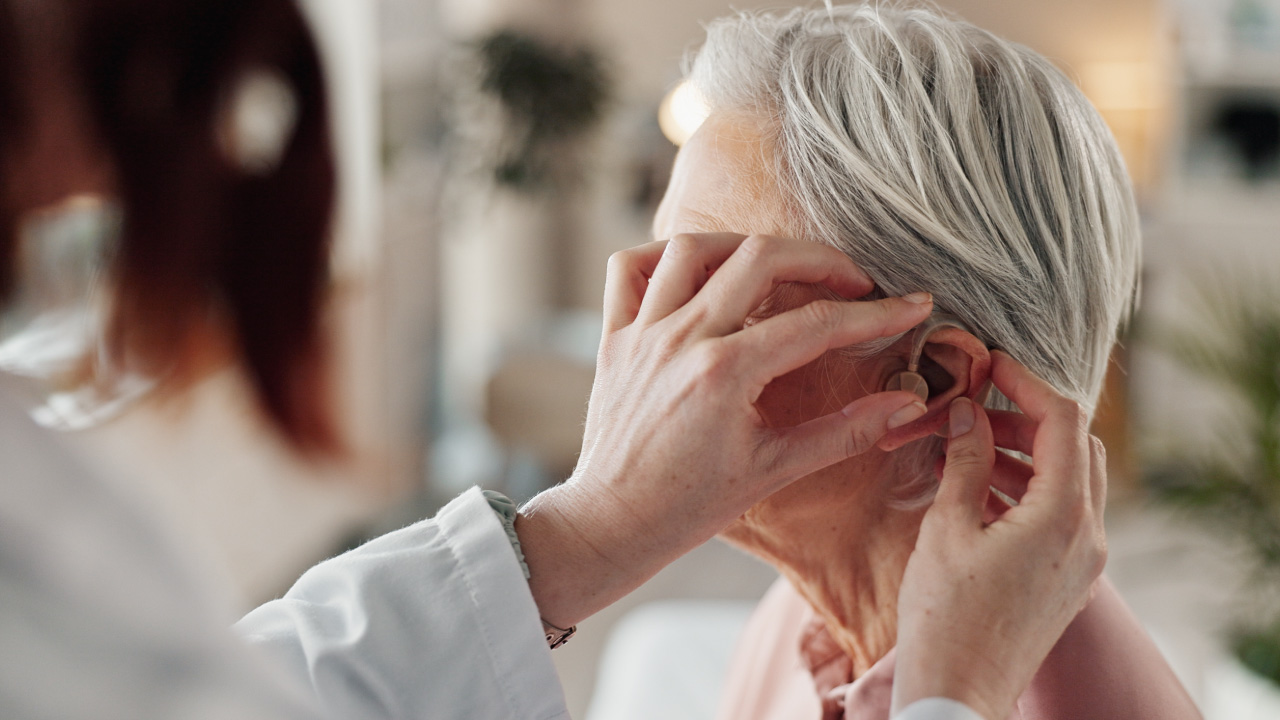
When the world starts to sound distant, we can feel a little more alone. If conversation has stopped being a pleasure, the television has started creeping louder and the fear of "being a nuisance" by asking people to repeat themselves has crept in, this article wants to be company: we explain, calmly, how hearing aids can give you back comfort, independence and happiness.
Key points of this article
- Digital hearing aids pick up, process and amplify sound in a personalised way, improving speech comprehension and social participation
- Presbycusis is the most common cause in ageing; warning signs include a loud TV, asking people to repeat themselves and listening fatigue
- Types of aid (RIC/RITE, ITE/ITC/CIC, CROS/BiCROS, bone conduction) and rechargeable or battery options; the choice depends on the profile and the context of use
- Realistic expectations: they rehabilitate hearing (they do not "cure" it); success requires a practical trial, adjustments and follow-up
- In Portugal: start with ENT/Audiology, compare the service included and the costs, and confirm reimbursements (ADSE, the public-sector health scheme/insurance/local councils)
- Simple maintenance (cleaning, drying, filters) and regular check-ups increase comfort, performance and working life.
What is a hearing aid?
It is a device that works real wonders. A hearing aid is an electronic device that picks up sound, processes it digitally and returns it to the ear through a speaker. There are several types of hearing aid, but the goal is shared by all of them: to give back hearing and happiness.
Hearing loss common in ageing (presbycusis)
Presbycusis is a gradual wearing down of the sensory cells of our ear; it begins with the higher-pitched sounds, so hearing is possible, but understanding starts to become difficult. It is one of the most common chronic conditions that arise with ageing. When left untreated, this hearing loss can cause social isolation, tiredness and less safety. There are signs that should be looked at carefully.
Warning signs (turning up the volume, asking people to repeat, social fatigue)
- TV/radio louder and louder
- "Eh?"/"Could you say that again?" especially in restaurants and echoey rooms
- Listening fatigue at the end of the day: hearing takes effort
- Strategy: if these signs have been present for more than 3 months, book an appointment with ENT/Audiology for an audiogram.
How does a hearing aid work?
Like all devices, hearing aids go through a particular process before the sound can be reproduced.
Microphone → digital processor → amplification → speaker
- Microphones pick up the sound (many models have two to sense direction)
- The DSP processor analyses the signal and applies the right "gain" per frequency band
- The output/receiver sends the sound to the ear via a tube/dome (BTE/RIC) or directly (in-the-ear)
- Fine-tuning: the professional calibrates it at the appointment and re-tunes it after real-world use.
Programmes and algorithms (noise reduction, directionality, feedback)
- Noise reduction: dampens continuous sounds (fans, traffic) while preserving speech
- Directionality: focuses on what is in front; useful in face-to-face conversations
- Feedback management: avoids "whistling" by adjusting phase/gain and improving the seal
- Others: automatic environment detection, frequency compression (brings high pitches into audible zones), wind cancellation.
Connectivity (Bluetooth, telecoil/induction, smartphone apps)
Over the years the aids have evolved, and so have their features.
- Bluetooth/LE Audio: calls and music directly in the aid; some use the phone as a remote microphone (teacher/speaker)
- Telecoil (T-coil): connects to induction loops in churches, theatres, service counters; clear sound with no echo
- Apps: change programme/volume, locate aids, make simple "tweaks" between appointments.
Types of hearing aid (and who they are for)
There is no universal aid that suits everyone's needs. So let's look at which ones exist and what they are for.
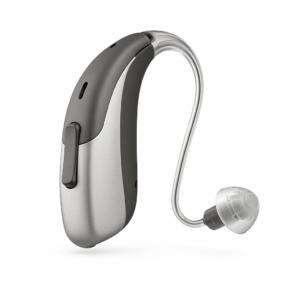
RIC/RITE (receiver-in-canal/ear)
This hearing aid is more discreet and is suited to those who have had mild to severe loss. It transforms sound naturally, is easy to swap and balances aesthetics and performance. Maintenance is simple but very necessary, since the receiver in the canal is more exposed to moisture and wax.
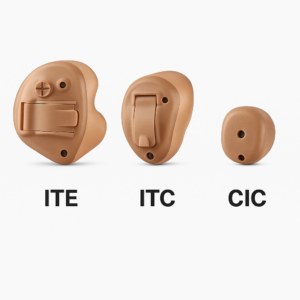
ITE/ITC/CIC (in-the-ear/in-canal/invisible)
This aid is intended for people who value aesthetics and simplicity, all in a single piece. It has advantages such as being stable even when wearing a mask or hat, and having no piece behind the ear. However, it also has some limitations: being more discreet, it has less room for the microphones and antennas, which reduces power, and its features are more modest; it will always depend on the anatomy of the canal.
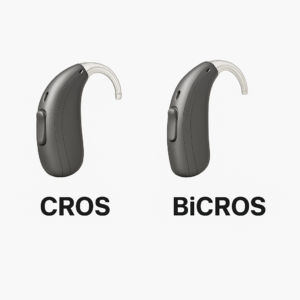
CROS/BiCROS – unilateral/asymmetric loss
This type of aid fits the needs of people who have lost the hearing in one ear: in this way the microphone on the "bad" side sends the sound to the "good" side and avoids sound blind spots.
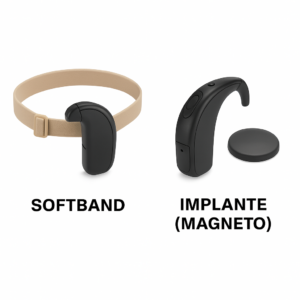
Bone conduction – specific indications
The bone conduction hearing aid is for those who have canal atresia, chronic ear infections with a contraindication for the air-conduction route, conductive/mixed losses or unilateral deafness.
Options: external headbands/clips or implants (subject to ENT assessment).
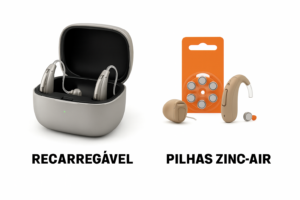
Rechargeable vs. batteries (zinc-air)
They offer advantages such as:
- Rechargeable: practical (charging base), great for those with limited dexterity; typical battery life 18 to 30 hours
- Batteries: cheap and quick to change; useful if you do not have a routine for charging
Tip: think about your day (hours of use, calls, streaming) when choosing.
When it is "worth it" to use one
Proven benefits
Hearing aids are associated with improvements in communication, allowing clearer speech and less effort to hear. They reduce isolation, encourage social participation and improve quality of life. In terms of safety they also have a major impact, making it possible to hear doorbells, security alarms and traffic noises (passing cars and horns).
Impact on daily life
In terms of daily life, these devices create a sense of belonging and inclusion, help you take an active part in conversations, mean the television volume at home can be comfortable for everyone living there, and turn answering calls from a headache into something easier because you hear more clearly and cope better with noise.
Realistic expectations
It is important to stress that hearing aids do not cure the problem but rehabilitate hearing. The process of adapting to the devices is not always immediate, and it is important to understand that the brain needs time to relearn how to hear sounds that were previously absent, and this can take a few weeks (usually between 2 and 6). The doctor's follow-up is essential so that small adjustments can be made to transform the experience for the better.
How to choose (step by step in Portugal)
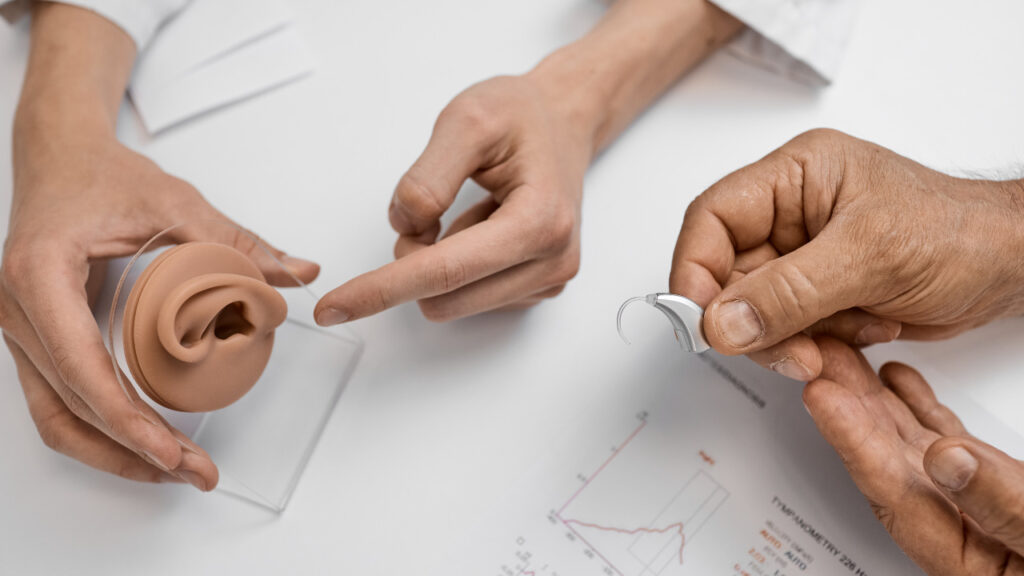
The first step is an assessment with ENT/Audiology for a diagnosis and audiogram. Then, ask for a demonstration tailored to your profile and test the aid in your routines (home, street, work), going back for adjustments. In the decision, weigh up comfort and fit, ease of cleaning, the effectiveness of the directional microphones, the connectivity (Bluetooth/telecoil), the usability of the controls and the quality of the after-sales service (check-ups, reprogramming, a replacement aid).
Approximate costs and price factors – technology, brand, services included
| Brand / Shop | Basic | Intermediate | Advanced | Distinguishing features & Services |
|---|---|---|---|---|
|
Audição Activa
PT |
≈ 295 € | ≈ 700–1 500 € | ≈ 2 000–3 500 € |
Basic · Standard · Premium
Reprogramming
Lifetime assistance
Bluetooth/AI in the higher ranges; no-obligation trial. |
|
Audika
(formerly Acústica Médica)
PT |
≈ 299 € | ≈ 1 000–2 000 € | up to 4 380 € |
Official price band
60 days to exchange
Batteries included |
|
Minisom
(Amplifon)
PT |
≈ 500–700 € | ≈ 900–1 800 € | ≈ 2 000–2 500 € |
Quote at appointment
Personalised fitting
Payment plans
Price varies by miniaturisation & power. |
|
Wells
PT |
780 € (launch price) | ≈ 1 000–1 800 € | ≈ 2 000–2 500 € |
15-day trial
Annual reprogramming
2 years of batteries
International brands; rechargeable options. |
|
Audição Directa
Online |
550 € BTE/ITC | — | — |
Budget segment
Online test
Telephone support
Rechargeable vs. batteries guide; accessories and consumables. |
|
International brands
(Phonak, Beltone, Oticon, Widex – EU) |
≈ 900–1 300 € | ≈ 1 500–2 000 € | 2 190–2 790 € |
Bluetooth LE Audio
AI & sensors
4–5 year warranty
Remote adjustment
Prices from European shops for top-of-the-range models. |
Reimbursements/insurance
ADSE (the Portuguese public-sector employees' health scheme)
ADSE usually reimburses hearing aids when bought from approved providers and with an ENT prescription. The amount and the renewal period are set out in the Approved Scheme Price Table (Tabela do Regime Convencionado) and may differ by type of aid (per ear) and by whether or not associated services are included (moulds, adjustments, check-ups).
Other health subsystems (SAMS, SAD/GNR, IASFA, etc.)
tend to follow a similar logic: an accredited network, an act prescribed by an ENT and limits per aid/per ear.
Health insurance
Not all insurance policies include hearing aids in the base plan. When they do, it is common to have:
- An annual limit or a limit per device (per ear)
- A waiting period (e.g. 60–180 days after taking out/upgrading the policy)
- A co-payment (a percentage borne by the insured person)
- A network requirement (buying from an approved shop/supplier).
Municipal support and social action
Some town and parish councils have support funds for health devices in situations of financial hardship (subject to tax returns and a clinical report).
Maintenance, hygiene and durability
Keeping a daily cleaning routine increases the equipment's longevity. Simple steps such as:
- Drying them overnight in a dehumidifying case
- Cleaning the domes and tubes
- Replacing the wax filters
- Storing them away from moisture and heat.
Another important step is to schedule check-ups every 6–12 months for a professional clean, an acoustic check and reprogramming. The working life of the aids is between three and seven years; seek assistance if you notice a drop in battery life, persistent whistling, muffled sound or intermittent faults.
Myths and frequent questions
"Will I become dependent?" "Will it whistle?" "Will people notice?"
- Dependence: no; you gain quality of life
- Whistling: avoidable with a good seal and fitting
- Visibility: today's models (RIC/CIC) are barely visible.
"Can I use it with a mask/glasses/hat?"
- Yes. Adjusting the fit and using clips/retainers prevents them falling when you take off a mask/hat.
"What if I have arthritis or reduced dexterity?"
- Go for rechargeable ones, larger buttons and an app to control volume/programmes without handling small parts.
Hearing better is living better
With the right assessment, a real trial and follow-up, hearing aids give back clarity, independence and safety, and open the door to conversations and moments that have been missed.
Summary and next steps
- Book an assessment with ENT/Audiology
- Ask for a demonstration period and take notes on difficult situations
- Assess comfort, performance in noise and the connectivity you need
- Confirm the warranty terms and support available (ADSE/insurance/local council)
- Keep up regular check-ups and a simple hygiene routine.
The content of this blog is for information only. It does not replace medical diagnosis or treatment. Always consult a healthcare professional.
Need non-emergency patient transport?
Ambula handles everything — with comfort, punctuality and care.
Book a transport