
Non-emergency patient transport: how it works and who is entitled to it

Non-emergency patient transport is a vital part of access to healthcare, ensuring that all patients receive the care they need, even if they cannot travel by their own means. But how does this service really work? Who is entitled to it and what options are available?
What is non-emergency patient transport?
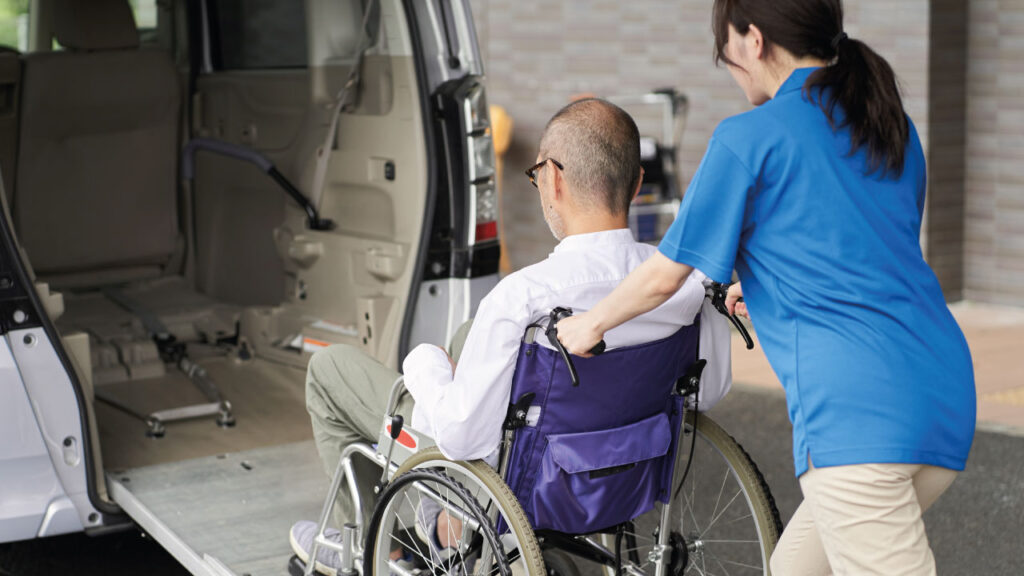
It is a service that ensures the safe transport of patients in specialised vehicles such as ambulances and Dedicated Patient Transport Vehicles (VDTD), to specific destinations related to healthcare. It is intended for patients who need support to travel to and from health units — such as hospitals, health centres and clinics — whether for appointments, regular treatments (such as haemodialysis or physiotherapy) or to return home after a hospital stay.
Unlike emergency transport, called via 112 and requiring an immediate response and specialised medical care, non-emergency transport focuses on the patient''s comfort and safety, ensuring a suitable and calm journey, whether the need is one-off or ongoing.
Types of non-emergency patient transport
This type of transport can be carried out in ambulances or in dedicated patient transport vehicles (VDTD) and can take place in two main ways:
- Individual transport: carried out exclusively for a single patient and intended for cases where it is clinically indicated that the person should not share the vehicle with others
- Shared transport: when the health conditions of several patients allow it, the transport can be shared with other patients who need similar care. So, on some journeys, it is possible to make stops to pick up other patients, as long as the total route does not exceed the distance and time limits set by the SNS (the Portuguese National Health Service).
In these situations, small detours from the initial route are allowed, with a limit of up to 10 km or 30 minutes. Transport schedules are ideally organised to carry several patients who have appointments or treatments booked for the same period.
With Ambula, you have access to various types of transport, including ambulances for individual non-emergency transport and vehicles adapted for different mobility needs.
Who is entitled to non-emergency patient transport?
To benefit from free or reduced-cost transport, you must meet certain specific requirements defined by the SNS. The conditions for exemption from payment are:
- Financial hardship: patients who can prove a situation of financial hardship may have access to free transport, provided they meet one of the following additional conditions:
- Disability of 60% or more
- A need for transport due to an incapacitating clinical condition such as motor after-effects of vascular diseases, heart or respiratory failure, oncological or neuromuscular diseases, high-risk pregnancy, among others.
- Long-term illness: patients with conditions requiring continuous and prolonged treatment such as cases of chronic kidney failure (requiring dialysis), long-term motor rehabilitation or palliative care
- Special situations: people recognised as victims of natural disasters (such as, for example, the 2017 and 2018 wildfires) are also entitled to free transport for treatments.
Please note that, to benefit from this entitlement, the attending doctor, preferably from the SNS, must issue a prescription confirming the patient''s state of health and the need for transport.
How is a situation of financial hardship determined?
A household is considered to be in a situation of financial hardship if its average monthly income, divided by the number of members responsible for supporting the household, does not exceed 763.89 euros. This figure, which can vary annually, corresponds to 1.5 times the value of the Social Support Index (IAS), which, in 2024, is 509.26 euros.
In addition, unemployed people registered at the Job Centre, as well as their respective spouse and dependants, are also recognised as being in a situation of financial hardship.
How do I request non-emergency patient transport?
To request this type of transport, the patient must obtain a medical prescription confirming the need for the service. This prescription can be issued by the SNS doctor and must include a detailed clinical justification. With the prescription in hand, the patient can request transport through the health services or contact directly entities authorised to provide this service, such as the fire brigade, the Red Cross, associations or specialised companies, as is the case with Ambula.
Can I have a companion during the transport?
Yes, as long as the doctor justifies this need, such as in cases of being a minor or of profound incapacity.
And if I am not entitled to free transport?
If you are not entitled to free transport, you can count on Ambula, an intuitive and easy-to-use digital platform for booking non-emergency patient transport. With the Ambula app, you can quickly book the transport you need, which can be adjusted to the patient''s specific needs, always with a focus on safety, comfort and cost transparency.
Ambula offers several advantages for users:
- Intuitive platform: it makes booking transport easier, simplifying the process for those who need frequent journeys
- Real-time tracking: it lets you follow the journey via geolocation, which provides peace of mind to carers and family members
- Full transparency: it offers clear information about prices and times, with no surprises
- Electronic payments: the payment and invoicing process is simple and fast and allows secure electronic transactions
- Guaranteed quality: Ambula works with companies that follow strict quality and ethical standards, ensuring reliable and excellent services.
With these features, Ambula contributes to a safe, modern and humanised transport experience.
How much does non-emergency patient transport cost?
For those who are not entitled to free transport, the cost of the service varies according to the route, the duration and the type of transport required. This figure may include call-out fees (a fixed fee for shorter journeys, which already covers the patient''s outward and return trip), a price per kilometre, a waiting-time charge and, in some cases, additional costs, such as the use of oxygen or the presence of a companion.
With the Ambula app, we guarantee full transparency: clear information about prices and times, with no surprises.
Need non-emergency patient transport?
Ambula handles everything — with comfort, punctuality and care.
Book a transport