
Reduced mobility: rights and how to promote accessibility

Can you imagine a scenario in which the simple task of leaving the house or going to the kitchen becomes a challenge? Reduced mobility can affect any one of us, whether through an accident, a health condition or something as natural as ageing.
In this article, we will explore what it really means to have limited mobility, the obstacles that arise and the solutions for ensuring accessibility, without forgetting the fundamental rights that everyone should have in order to live without barriers.
What does reduced mobility mean?
This condition describes the difficulty or limitation of movement that can arise temporarily or permanently. The person affected may have difficulty walking, standing up, sitting down or carrying out daily tasks independently. The causes of this limitation vary, and can range from chronic illnesses and injuries to ageing or temporary conditions:
- Advanced age: ageing can lead to a decline in muscle strength and flexibility, making movements slower and more difficult
- Chronic illnesses: conditions such as arthritis, multiple sclerosis or diabetes can affect the joints, muscles and nerves
- Injuries and accidents: broken bones, surgery or serious injuries can result in temporary or permanent reduced mobility
- Pregnancy, carrying small children or obesity: many temporary situations can also create difficulties in getting about.
It is important to highlight that those who suffer from reduced mobility do not always have obvious difficulties in getting about. A person who has had surgery on their hands, for example, may have difficulty using their hands to perform simple tasks, even though they can walk normally.
Rights of people with reduced mobility
- Access to specialist information. The right to obtain information about rights, benefits and duties at the Balcões da Inclusão (Inclusion Desks), at the Instituto Nacional para a Reabilitação (INR, National Institute for Rehabilitation) or at Segurança Social (Portuguese Social Security) centres
- Priority service. People with a degree of incapacity of 60% or more are entitled to priority service in public and private services, except in specific situations
- The right to complaints and grievances. The possibility of submitting complaints in cases of discrimination or lack of accessibility, with the support of responsible staff.
- Regime do Maior Acompanhado (Accompanied Adult Regime). This allows a person with a disability to be assisted by another to ensure the defence of their rights, without conflicts of interest
- Allocation of assistive products. Access to products and equipment to compensate for limitations in mobility or activities, with simplified funding
- Support in education and training. The right to inclusive education and appropriate support for children and young people with disabilities, ensuring active participation in the school community
- Access to the labour market. Specific measures to support access to employment for people with disabilities, including quotas and support with integration into the labour market
- Rights in the workplace. The possibility of requesting adjustments to working hours, adaptations to the workstation and absences for medical treatment without penalty.
- Rights on public transport. Priority access and reserved seats on public transport, with assistance during boarding, alighting and journeys
- Independent Living Support Model. Personal assistance for day-to-day activities, such as hygiene, meals and travel, aimed at greater autonomy and social inclusion.
How to promote accessibility
Accessibility is the key to enabling everyone, regardless of their limitations, to live independently and fully. The first step is to ensure that spaces, whether public or private, are adapted to remove the physical barriers that hinder mobility.
At home
Adapting the home for a person with reduced mobility does not have to be a difficult or expensive task. A few simple changes can make all the difference:
- Spacious areas. Make sure that furniture does not block the way. Wide doors and clear corridors are essential, especially for those who use a wheelchair or other mobility devices
- Adapted bathroom. Installing grab rails in the shower or beside the toilet, using non-slip flooring and adjusting the height of the basin are changes that can make the home safer
- Accessible kitchen. Lower worktops or units without cupboards underneath allow people in wheelchairs to manoeuvre easily.
On public transport
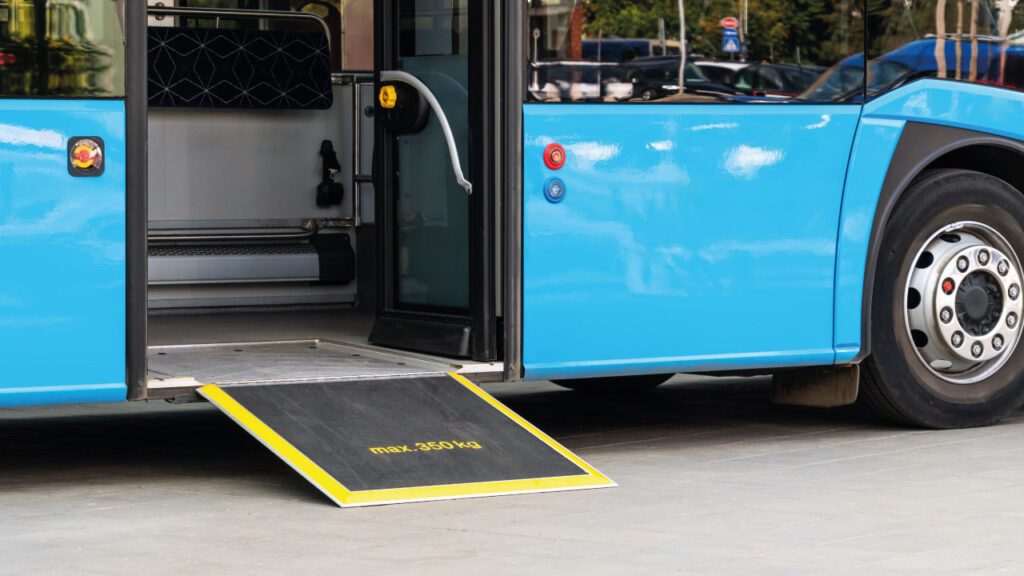
Accessibility on public transport is also essential to ensure that everyone can leave home easily and safely. Accessibility laws in Portugal, such as Decreto-Lei n.º 163/2006, require buses, trains and the metro to be ready to accommodate people with reduced mobility. This includes:
- Adapted vehicles. Buses with ramps and reserved spaces for wheelchairs
- Accessible signage. Audible and visual signage at stops and inside vehicles for people with sensory impairments
- Stations and platforms. Ramps, lifts and escalators should be present to make access easier for everyone.
In public and private buildings
Lei n.º 46/2006 ensures that public and private buildings, whether new or refurbished, are adapted for accessibility. This includes:
- Access ramps: to eliminate stairs and allow people with reduced mobility to get around more easily
- Lifts and wide doors: ensuring that anyone can move freely through the space
- Adapted toilets: so that everyone can use the space with the same dignity and autonomy.
Improving quality of life: a few tips
Although adapting environments is essential to improving the quality of life of people with reduced mobility, caring for physical and emotional health and overall wellbeing is essential to increasing autonomy and comfort. Here are some practical tips to make day-to-day life easier and more pleasant:
- Taking adapted physical exercise such as aqua aerobics, pilates or yoga helps to improve muscle strength, flexibility and mobility
- Maintaining a healthy, balanced diet is important for general health and prevents illnesses that can worsen the mobility limitation
- Seeking emotional support and taking part in support groups or undergoing therapy is an excellent way to deal with the emotional issues related to reduced mobility
- Investing in assistive technologies can increase independence and help with carrying out daily tasks more efficiently
- Keeping a regular routine of rest and sleep is also very important, since adequate rest contributes to physical and mental recovery
- Relying on a social support network, made up of family and friends, provides the support needed to face daily challenges in a calmer and more secure way.
Need non-emergency patient transport?
Ambula handles everything — with comfort, punctuality and care.
Book a transport