
How to recognise and face the stages of dementia with respect and tenderness
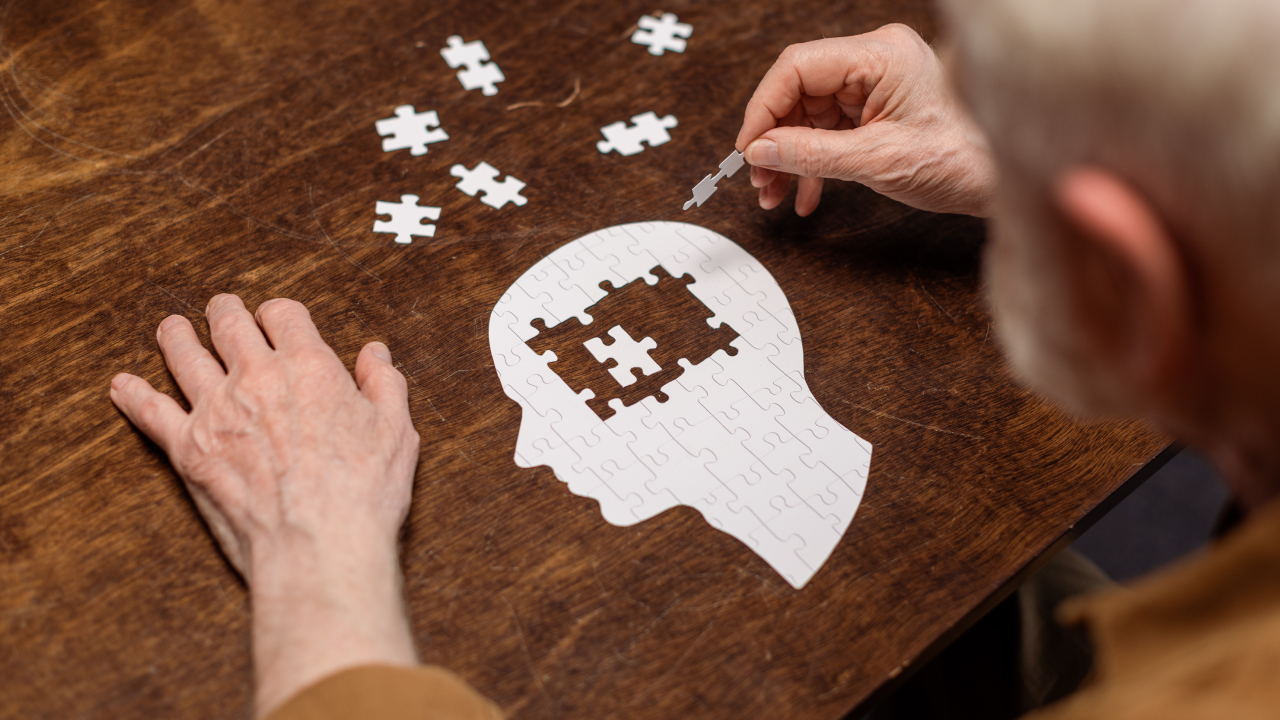
Did you know that more than 200,000 people live with dementia in Portugal?
To talk about dementia is to talk about a difficult journey, both for the person living with the condition and for those who care for them. Little by little, memory begins to fail, behaviour changes, and daily life is no longer the same. It is hard, confusing and at times even unfair.
But knowing what to expect can make all the difference. Because, even when everything seems to fall apart, there are ways to care with more calm, more presence and less fear.
Key points of this article
- Dementia is a set of symptoms that affects memory, reasoning and behaviour, and that worsens over time
- There are several types of dementia, the most common being: Alzheimer's, vascular dementia, dementia with Lewy bodies and frontotemporal dementia
- Each type of dementia has different manifestations, but they generally progress through three stages: early, moderate and advanced
- Spotting the first signs and understanding the stages helps you to prepare better support for the person with dementia
- Early diagnosis, cognitive stimulation and a supportive environment can slow the progression of the condition
- Supporting someone with dementia requires constant adaptation, empathy and, often, specialist support.
What is dementia?
Dementia is not a specific illness, but rather a term used to describe a set of symptoms that affect the brain. We are talking about progressive memory loss, difficulty thinking, communicating, making decisions or even recognising familiar faces and places. These symptoms interfere with a person's independence and gradually make daily life more challenging.
In Portugal, it is estimated that cases of dementia could double by 2080, exceeding 450,000 cases (almost 5% of the population), according to a study by CIDIFAD (a Portuguese research centre on ageing and dementia). This increase is directly linked to the ageing of the population, making it even more urgent to invest in prevention, early diagnosis and support for families.
Given this picture, it is important to understand the condition better and how it presents itself. There are several types of dementia, but they all have one thing in common: they are progressive conditions. This means that the symptoms begin mildly and worsen over time.
What are the first signs of dementia?
The first signs of dementia can be subtle – so subtle that they are often mistaken for “just getting older” or simple tiredness. But there are behaviours and lapses of memory that, when they become frequent, deserve attention.
Some of the most common signs include:
- Recent memory lapses, such as repeating questions or forgetting where they put things
- Difficulty finding words or following a conversation
- Disorientation in time and place, even in familiar surroundings
- Changes in mood or behaviour, such as irritability, apathy or unwarranted suspicion
- A reduced ability to plan or make simple decisions, such as preparing a meal or paying bills.
These signs do not, on their own, mean that it is dementia, but they are an important prompt to seek a medical assessment. The earlier the diagnosis is made, the sooner action can be taken to slow the progression and ensure a better quality of life.
For more information and support, you can visit Alzheimer Portugal (the national Alzheimer's association), one of the leading authorities in this field in the country.
The four most common types of dementia
Not all forms of dementia are the same. While some begin with seemingly harmless memory lapses, others show themselves through changes in personality or episodes of hallucination.
Knowing the different types of dementia is an important step towards understanding better what is happening to the person living with the condition… and even towards avoiding hasty judgements.
Alzheimer's disease
This is the most common form of dementia. It mainly affects memory and often begins with seemingly harmless memory lapses. Over time, it gradually impairs language, reasoning and the ability to recognise people or places.
Vascular dementia
Caused by problems with blood flow in the brain, such as strokes or small strokes. The symptoms depend on the area affected, and the progression can happen in “jumps”, meaning the person may suddenly get worse after a new vascular episode.
Life expectancy with vascular dementia depends on the severity of previous strokes, other coexisting conditions and how quickly cognitive decline sets in. On average, after diagnosis, life expectancy can range between 5 and 10 years, but with wide variation from person to person.
Dementia with Lewy bodies
It is characterised by fluctuations in attention, visual hallucinations, tremors and muscle stiffness. It can be confused with Parkinson's, but the cognitive decline appears earlier. Memory may even be preserved in the early stages.
Frontotemporal dementia
It affects the frontal and temporal regions of the brain, which means that the first signs are not always linked to memory. Instead, what is noticed earliest are changes in behaviour, impulsiveness, difficulty communicating or even a loss of empathy.
This was the type of dementia diagnosed in the actor Bruce Willis, a case that brought greater visibility to the condition and showed the world the real impact it can have, even on people who are still relatively young.

Early stage (mild)
At this stage, the signs may go unnoticed or be mistaken for natural ageing. The person remains relatively independent, but subtle changes begin to show.
What is common at this stage:
- Frequent memory lapses, especially of recent events
- Difficulty finding the right words or following a conversation
- Disorientation in less familiar places
- Changes in mood or apathy
- Loss of initiative or interest in hobbies
- Small mistakes handling money or with simple household tasks.
Middle stage (moderate)
Here, the symptoms become more obvious and start to interfere with daily life. The person begins to need help with basic tasks and the loss of independence is more noticeable.
At this stage there may be:
- Constant memory lapses, even of important events
- Disorientation in time and place
- Difficulty getting dressed or preparing meals
- Confusion over the faces of family or friends
- Changes in behaviour (aggression, suspicion, repeating words)
- Problems with language and comprehension
- The onset of urinary incontinence.
Advanced stage (severe)
This is the most difficult and painful stage. The person loses much of their cognitive and physical abilities. They become entirely dependent for all basic activities and may not recognise anyone around them.
It is common to find:
- An inability to communicate or understand language
- Immobility, with loss of coordination and balance
- Difficulty swallowing or feeding themselves
- Complete incontinence
- No recognition of family members
- Agitation, restlessness or extreme apathy
- A higher risk of infections, such as pneumonia.
At this stage, the focus shifts to comfort:
- Palliative care and attention to pain
- Simple sensory stimulation (such as touch, music or smell)
- Preserving dignity and emotional wellbeing.
It is important to remember that these stages are only a general guide. Not everyone with dementia experiences the condition in the same way – the symptoms may appear at different times, vary in intensity or even occur in a different order.
Each type of dementia has its own pace and pattern of progression. Below, see how these stages present themselves in the main types of dementia.
The stages of Alzheimer's (the most common dementia)
- Early stage: loss of recent memory, disorientation in time, difficulty finding words
- Middle stage: greater confusion, difficulty recognising close family and friends, changes in behaviour (irritability, suspicion), difficulty carrying out everyday tasks
- Advanced stage: loss of long-term memory, motor difficulties, loss of speech, complete need for care.
The progression is usually slow and gradual, with a quiet onset.
The stages of vascular dementia
- Early stage: symptoms that vary according to the areas of the brain affected (which may appear suddenly after a stroke)
- Middle stage: difficulty with concentration, planning and logical reasoning
- Advanced stage: a “step-like” progression — stable periods followed by abrupt declines; eventual complete dependence.
The progression is more irregular, with fluctuations and sudden worsening.
The stages of dementia with Lewy bodies
- Early stage: fluctuations in alertness, vivid visual hallucinations, sleep problems (such as REM sleep behaviour disorder)
- Middle stage: muscle stiffness, tremors similar to those of Parkinson's, mental confusion
- Advanced stage: marked cognitive decline, worsening motor symptoms and a risk of falls.
Early hallucinations and marked fluctuations are the distinguishing features.
The stages of frontotemporal dementia
- Early stage: changes in personality, impulsiveness, disinhibition, impoverished or repetitive language
- Middle stage: loss of empathy, compulsive behaviours, increasing difficulty communicating
- Final stage: mutism, physical rigidity, the need for constant care.
It affects behaviour and language first, rather than memory.
What can help to slow the progression?
Although there is no cure for dementia, that does not mean nothing can be done. There are small everyday choices that can make a big difference, helping to maintain abilities for longer and making the journey lighter, both for the person living with the condition and for those who care for them.
- Stimulating the brain (reading, music, simple games)
- Doing light, regular physical exercise
- Eating a healthy, balanced diet
- Sleeping well and avoiding stress
- Keeping up social contact whenever possible
- Managing other conditions (such as diabetes or high blood pressure)
- Watching for signs of delirium, infections or falls.
How to support someone with dementia at each stage
Living with or caring for someone with dementia is a demanding path, with moments of frustration but also of deep connection. As the condition progresses, the person's needs change – and it is important to adapt the way you communicate, care and are present.
Here are some practical pointers for each stage:
Early stage: supporting independence
- Stimulating memory and reasoning with games, conversation and simple tasks.
- Encouraging structured routines, such as set times for meals and medication
- Encouraging independence, even if the person needs more time to do certain tasks
- Speaking calmly and clearly, allowing time to respond
- Helping with accepting the diagnosis, listening without judgement and offering reassurance.
Middle stage: protecting and adapting
- Reducing risks at home, such as loose rugs, hobs left on or dangerous objects
- Using visual reminders: labels on cupboards, picture calendars, photographs with names
- Helping with washing and eating, always keeping respect for the person's dignity
- Encouraging social contact and cherished memories, even if some recollections have already been lost.
Advanced stage (severe): caring with presence and affection
- Ensuring physical and emotional comfort: soft clothing, a calm environment, gentle music
- Talking to the person, even if they do not respond — a loving presence still makes a difference
- Paying attention to non-verbal signs: a gesture of discomfort or a facial expression may indicate pain, cold or hunger
- Seeking specialist support, such as palliative care teams or carer-support services.
Dementia is a condition that deeply touches the lives of those who live with it and those who care for them. Each stage brings challenges, yes, but it can also bring new forms of connection, presence and care. There is no magic formula and no single path that is the same for everyone, but there is always something that can be done: to listen, to adapt, to embrace.
If someone close to you is going through this journey, know that you are not alone. Supporting someone with dementia takes time, patience… and, often, specialist support.
Ambula is here for exactly that. With a comfortable, caring non-emergency patient transport service, it helps many families every day to take their loved ones to appointments, treatments or tests, with all the safety and care they deserve. Because, in these stages of life, every gesture of support counts, and every calm journey makes a difference.
Need non-emergency patient transport?
Ambula handles everything — with comfort, punctuality and care.
Book a transport